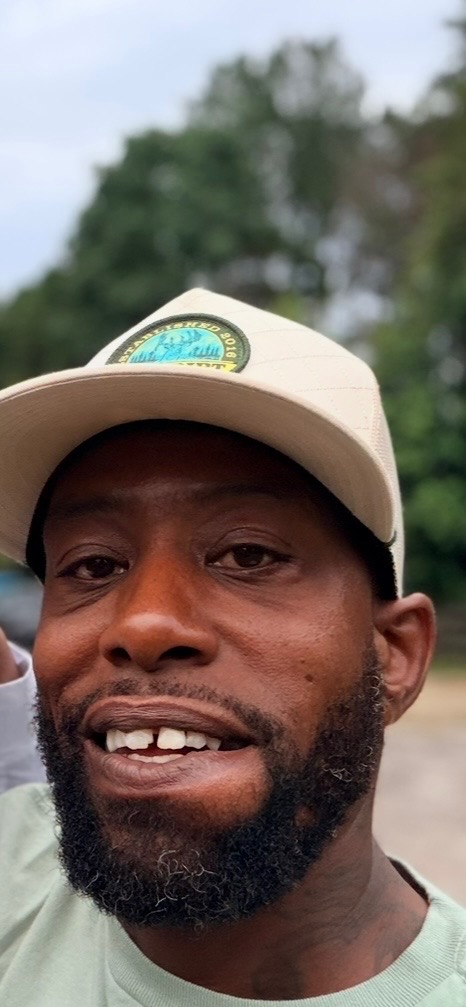
Anthony Brown
Anthony Brown, a case highlighting the need for improved preservation of biological evidence and the need for forensic independence
Anthony Brown was wrongfully incarcerated for 7 years for an armed robbery he did not commit. His case is fraught with systemic issues including false fingerprint evidence, destruction of evidence in violation of statute, and ineffective assistance of counsel.
Shortly before 7 p.m. on January 28, 2014, a Black man wearing a hat approached two workers stocking shelves at a Dollar Tree in Durham and asked to buy a pack of gum. One worker went to the register to cash the man out, and moments later, he threatened her with an object hidden in his jacket pocket that made a “click” noise. He demanded money. The worker and her associate complied, unlocked the cash register, and emptied it of all the bills. The robber left the store with $208. After he left, the two workers locked the store and called the police.
While at the Dollar Tree, Durham police interviewed Kristin Hunt, the white assistant manager, who described the robber as having a “stocky” build, and Brittany Evans, a black cashier, who told police that the robber was “pudgy in the face.” Neither Hunt nor Evans noted a beard, and the robber was not wearing a mask, leaving his face visible to the workers. Although the robbery was caught on surveillance cameras recording the registers, they did not capture a clear view of the robber’s face. Police lifted 8 prints, 7 from the front door of the Dollar Tree and one from the pack of gum that the robber held and placed on the counter. After analyzing the prints, police found that one print from the door matched Anthony Brown. On February 1st, police arrested Anthony on a marijuana charge, and his arrest photo shows a slim man with a full beard.
Based on the print match, police prepared three suspect photo lineups that included Anthony and six other Black men. Hunt first identified another person in the lineup before choosing Anthony, and when she identified Anthony, she told police she remembered the robber did not have any facial hair. She said she picked Anthony because of “the look in his eyes.” Ebony Green, a cashier from a different store in Durham that had been robbed 10 days earlier in a similar fashion, also first picked another person with 50% confidence, then changed her pick to Anthony, saying that “maybe” if Anthony was wearing glasses and if the photo of Anthony was older (which it was not), then he might have been the robber. However, Evans, who interacted with the robber much more, did not identify anyone in the lineup. This remained true after the officer pointed to Anthony and asked if she was sure he was not the robber.
During the investigation, investigators found nothing that connected Anthony to the crime other than his palm print on the door. No clothing, gun, or cash was found with Anthony that connected him to the store robbery, and the handprint could be explained by the fact that he was a regular at the store.
Anthony was arrested on February 6th. He denied any involvement in the robbery, rejected an offer to plead guilty to lesser crimes, and maintained his innocence.
At trial, the prosecution relied on the testimony of Hunt, Anthony’s handprint found on the front door, records showing Anthony, like many others, left work at 5 p.m. the day of the robbery, and the unclear video surveillance footage. During Hunt’s testimony, she talked about how she was very scared and did not pay close attention to the robber’s face, but she did remember that the robber did not have much facial hair at all. According to an unrelated arrest photo taken days after the robbery, Anthony had a full beard, but his attorney did not introduce the photo at trial.
Hunt also commented that the robber had more “thickness” to his face and was not nearly as “skinny” or “bony” as Anthony was in court. Based on his medical records, Anthony weighed about the same as he did the month before the robbery, but Anthony’s attorney did not introduce those records either.
During trial, Evans testified that she was scared, but that Hunt looked even more scared than she was. Evans was able to stare at the robber, got a good look at his face, and said that the robber looked nothing like Anthony. She testified that she knew Anthony as a regular in the store and he was not the robber. The prosecution dismissed her words, asserting that she had read from a “script” that was part of a show “with smoke and mirrors and props.”
Anthony was found guilty of robbery with a dangerous weapon and was sentenced to nine and a half years in prison. He was released on February 15, 2021.
The Center had DNA testing done on the pack of gum the robber placed on the counter, but it did not get any results, likely because police swabbed the pack of gum after lifting the fingerprint from it. After inquiring about the prints so DNA could be conducted on them, the Center learned the prints were destroyed in June 2019, in violation of statute and after notice was given to the District Attorney’s Office that the Center was investigating the case.
The Center filed a Motion for Appropriate Relief on Anthony’s behalf and asked the court to vacate the conviction and order a new trial based on the destruction of evidence without proper notice, in violation of the statute, and ineffective assistance of counsel for failing to reasonably investigate or challenge the identification. A hearing on the destruction-of-evidence issue surprisingly ended without relief.
In 2025, the Center filed another Motion for Appropriate Relief based on ineffective assistance of counsel, and in 2026, important new evidence developed after the latent prints collected at the crime scene were run through the fingerprint database, SAFIS. That run not only matched a print to a previously unidentified person who fits the suspect’s physical description and had weapons-related arrests on his record, but also confirmed that all identifiable prints had not been run in 2014, as reported. The Center immediately filed an Amended Motion for Appropriate Relief, but it wasn’t until the Center started issuing subpoenas for law enforcement that the District Attorney consented to vacating Anthony’s conviction. On August 4, 2026, the Honorable Judge Edwin Wilson signed a Consent Order Vacating Anthony’s Conviction and dismissing his charge. Anthony spent 7 years wrongfully incarcerated and over 5 years, post-release, living the same life as the guilty. While we are happy Anthony can finally be free of this conviction, we know it will take a lifetime for him to heal.
From Anthony Brown:

Anthony Brown
“At the same time, it’s emotional because no decision can give me back the years I lost or erase everything my family and I endured…My plans are to rebuild my life, spend time with my loved ones, work hard, and appreciate every opportunity that comes my way…I don’t take freedom or time for granted anymore because I know how quickly both can be taken away…. Even when things seem impossible and it feels like no one is listening, you can’t give up.”
Get in Touch. Get Involved.